
THE CMAT MEDICAL DEVICE
This non-invasive, ANS Testing device examines 6 major health risk areas in order to ensure early detection of Diabetic Complications. Through accurate and analytical assessment of the Autonomic Nervous System and the Vascular Functions, to report Actionable Data to Physicians.
YOU WILL HAVE PLENTY OF OPPORTUNITIES TO ORDER THIS TEST!

THE CMAT DEVICE COMES IN TWO CHOICES
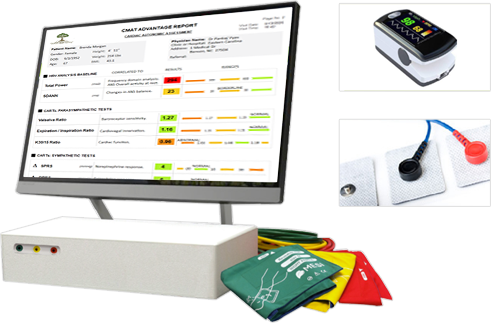
The CMAT System
Focusing on early detection and follow-up of complications (autonomic nervous system & vascular system) of chronic metabolic diseases such as Diabetes, the CMAT System is a user-friendly, non-invasive tool for Autonomic, Vascular and Cardiometabolic Risk Assessments.
This ANS Testing tool provides you, the Physician, with accurate measurement of the Heart-rate Variability and the Galvanic Skin Response of the patient through a simple test that takes less than 10 minutes to complete. The test result is conclusive and will aid you in the detection of Neuropathy in the patient before the conditions become symptomatic.
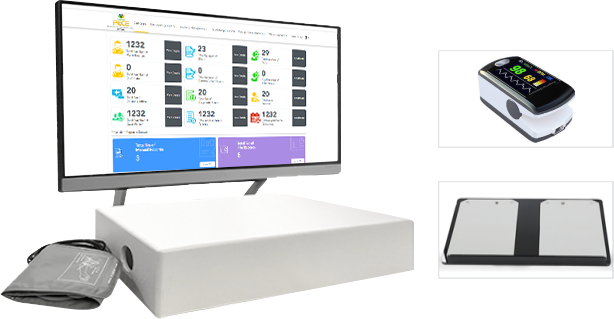
The CMAT Plus System
Incorporated with the non-invasive ANS testing program of the CMAT System, the PECETM Virtual Platform utilizes the Advanced Wellness Solutions Smart Engagement Form Technology to auto-populate accurate, analytical, and ACTIONABLE DATA for Physicians to access.
The PECE Virtual Platform, an all-inclusive Testing and Reporting program, will help you elevate the quality of Patient Care, and establish medical necessity for additional testing in order to detect more than 20 disease complications such as diabetes, heart attack, stroke, heart rate variability issues, nerve damage, and several other such conditions.

THE SCIENCE
BLOOD PRESSURE AND ARTERIAL STIFFNESS ANALYSIS
Monitoring and Treatment Management of Hypertension
HEART RATE VARIABILITY (HRV)
Cardiac Autonomic Dysfunctionand Fitness Assessment
PHOTOPLETHYSMOGRAPHY
Mathematical Analysis of the pulse Oximeter waveform , Vasomotion analysis and Vital signs
CARDIAC AUTONOMIC REFLEX TESTs (CARTs)
Cardiac Autonomic Neuropathy Assessment
ANKLE BRAKIAL INDEX (ABI)
Peripheral Artery Disease (PAD) Assessment , Blood Flow Blockage or Calcification
SUDOMOTOR FUNCTION TESTS
Cholinergic Sympathetic vasodilatory and Quantitative Sweat responses Assessments
What is Autonomic Neuropathy?
The Autonomic Nervous System (ANS) is an extensive neural network whose main role is to regulate the internal environment and body functions by controlling homeostasis, hemodynamics, blood pressure, heart rate, blood glucose levels, sweating and visceral functions (such as digestion, bladder and sexual organs).
The CMAT acts through a balance of stimulation or inhibition of its two components – the sympathetic and parasympathetic nervous systems. The sympathetic and parasympathetic branches act via neurotransmitter and receptor activation.
Autonomic dysfunction results from an imbalance between the two components and can affect any system of the body. Autonomic neuropathy is a failure of response from one or both components.
The primary causes of Autonomic Neuropathy include metabolic chronic diseases, high blood glucose, the long duration of diabetes, abnormal fat levels in the blood, and possibly low levels of insulin
Additional causes may also include:
Neurovascular factors leading to damage of the blood vessels that carry oxygen and nutrients to nerves
Autoimmune factors that cause inflammation in the nerves
Mechanical injury to nerves, such as carpal tunnel syndrome or inherited traits that increase susceptibility to nerve disease
Lifestyle factors, such as smoking or alcohol use
Vitamin deficiencies, particularly B and D vitamins
Biemer's Anemia
Infections, such as Lyme disease, shingles (varicella-zoster), Epstein-Barr, Hepatitis C, and HIV/AIDS
Kidney, liver or thyroid disorders
Exposure to toxins
Repetitive physical stress, possibly from occupational activities

Medications that significantly affect autonomic testing results:
Chlorpromazine, Thioridazine (Effects: Anticholinergic, antiadrenergic); Tricyclic antidepressants (Effect: Anticholinergic); Bupropion, Mirtazapine, Venlafaxine (Effect: NE reuptake inhibitors); Clonidine (Effect: Alpha-blocking agent); Alpha-blockers, Beta-blockers, Ca-channel blockers (Effects: Alter vasomotor tone and responses); Opiates (Effects: Intoxication: smooth muscle relaxation, histamine release, withdrawal hyperadrenergic state), Topical capsaicin (Effect: Altered skin vasomotor responses).
How does CMAT assess theAutonomic Nervous System?
The CMAT Scan analyzes the Photoplethysmography (PTG) waveform for precise and accurate detection of the beat to beat heart rate (RR-intervals). The blood pressure, while lying down and while standing, are measured by oscillometry (CMAT) or by volume plethysmography.
The sudomotor function is assessed by a galvanic skin response device either using metal plates following the electrical stimulation of the sweat glands (ANS-1) or disposable cloth electrodes and pressure cuffs placed on the ankles following a double stimulation - the metaboreflex and the electrical stimulation of the sweat glands (CMAT).
[The CMAT Scan’s assessment of the autonomic nervous system (ANS) follows the diagnostic guidelines of the Cardiac Autonomic Neuropathy (CAN) Subcommittee of the Toronto Consensus Panel on Diabetic Neuropathy.]
The methods for assessing the autonomic nervous system within a clinical practice include the evaluation of symptoms and signs, as well as the Heart Rate variability (HRV) analysis, the Cardiac autonomic reflex tests (CART’s), which are based on heart rate and blood pressure recordings. In addition, Sudomotor function tests are performed.
The Gold standard assessment of CART’s includes heart rate variability analysis and Ewing tests - such as heart rate responses to deep breathing, standing, Valsalva maneuver, and blood pressure response to standing. A tilt table may be suggested for performing the tests. The CART’s score is calculated by using the Jermendy Scoring System and it allows the result interpretation according to the guidance of the neurological associations.

What is Vascular Dysfunction?
Vascular dysfunction is related to Endothelial Dysfunction which is associated with arterial stiffness, microcirculation disorders, and Peripheral Artery Disease (PAD).
Endothelial dysfunction is characterized by a reduction of the bioavailability of Nitric Oxide (NO), which upsets the balance between vasoconstriction and vasodilation, and initiates a number of processes that promote hypertension.
In addition, endothelial damage includes increased endothelial permeability, platelet aggregation, pro-inflammatory and pro-coagulatory states, and monocytes migration from the blood into the subendothelial intima and transformation into macrophages, which accumulate lipids to form the lipid core of atherosclerotic plaque and increase arterial stiffness.
Endothelial dysfunction can be caused by several conditions, including diabetes or metabolic syndrome, hypertension, smoking, and physical inactivity
Additional causes may also include:
Carotid artery ultrasound
Peripheral artery ultrasound
TCP02 testing
Volume plethysmography recordings
Segmental pressures of the upper and lower extremities
Photoplethysmography recordings
How does CMAT assess Vascular Dysfunction?
The CMAT Scan analyzes the Photoplethysmography (PTG), and volume plethysmography recordings from segmental pressures of the upper and lower extremities. Volume Plethysmography is a technique which records the large artery blood flow with pressure cuffs and pump.
Our volume plethysmography analysis provides markers of arterial stiffness, which are Brachial-Ankle Pulse Wave Velocity, peripheral Augmentation Index, and Central Aortic Systolic Pressure.
Segmental pressures of the upper and lower extremities allow for the calculation of the Ankle-Brachial Indices in order to diagnose PAD.
PTG is a technique that records the peripheral circulation using infrared light with our oximeter.
Moreover, LD Technology has a pending patent method for analyzing the spectral domain of the PTG.
The PTG spectral analysis shows high specificity and sensitivity to differentiate control groups from diabetic or cardiovascular disease groups.

Why is Assessing ANS and Vascular Dysfunction Important?
The assessments of the autonomic nervous system, endothelial function, and Ankle-Brachial Index (ABI) are well-recognized tests to detect early complications in diabetic patients – diabetic neuropathy risk, cardiovascular risk, and peripheral artery disease. These assessments are recommended by the U.S. and International Medical Associations. Unfortunately, most of these assessments or exams are not routinely performed in daily clinical practice because of concerns about complex procedures, time consumption, and high level of difficulty in reading and/or interpreting exam reports.
The CMAT System eliminates these concerns by offering an innovative medical device that provides physicians with new and easy to use tools that simplify complex procedures, significantly reduces the time required by technicians to perform the exams, and offers easy to read and interpret exam reports with clinical guidance support which is backed by studies and peer reviews. Lastly, our most recent innovation includes wireless transmission to increase patient and technician comfort.
Conventional medical exams (blood lab tests, Doppler, EKG, blood pressure measurements, etc.) are commonly used to diagnose diseases, but these exam markers can be too narrowly used today in treatment management – e.g., Diabetes and high blood pressure. It is well understood that diabetes is a state marked by increased blood glucose levels, and the treatment is narrowly focused on reducing the blood lab test/s marker/s. The same narrow focus is true with Hypertension. High blood pressure treatment is focused on increasing blood flow. However, it’s not enough to focus on treatment that only reduces the disease diagnostic marker. Why? Because diabetes, high blood pressure, or vascular disease are complex chronic diseases that negatively affect homeostasis by damaging the body’s regulatory functions.
Homeostasis refers to stability, balance, or equilibrium within a cell or the body. It is an organism’s ability to keep a constant internal environment. Homeostasis is an important characteristic of living things. Keeping a stable internal environment requires constant adjustments as conditions change inside and outside the cell. The adjusting of systems within a cell is called homeostatic regulation. Because the internal and external environments of a cell are constantly changing, adjustments must be made continuously to stay at or near the setpoint (the normal level or range). Homeostasis can be thought of as a dynamic equilibrium rather than a constant, unchanging state.
Homeostatic regulation is adjusted by 2 main body networks: Autonomic nerves and Endothelial cells.
When the autonomic nervous system (ANS) and endothelial functions are properly working, the patient is in good health and has a high potential for recovery.
When one of the regulation’s functions fails or is stressed beyond its genetic potential for different reasons - inadequate lifestyle, aging, weak genetics, then disease may occur.
Lab tests show the damage of the regulation functions when the disease is already onset. By assessing the regulation functions, we could have early detection of a future potential disease when the treatment options can delay or reverse a condition or disease.
The conventional exams cannot detect Cardiac Autonomic Neuropathy (CAN) or endothelial dysfunction symptoms, and patients suffering from these symptoms cannot be treated effectively.
When a disease is diagnosed, the treatment management should not only control the disease diagnosis marker but also restore or maintain the regulations’ functions: Autonomic nervous system and endothelial functions.
Therefore, the ANS and endothelial function must be assessed as part of any patient health assessment or treatment follow up along with the conventional exams.
CMAT SYSTEM OVERVIEW
Review the ANS Testing Technologies included in the CMAT System, as well as the different Markers that demonstrate the Patient Health Conditions.

Copyright © 2019 WAS. All Rights Reserved.Terms & ConditionsPrivacy Policy

