
ATTENTIONPHYSICIANS!!
The CMAT System will be one of the largest reimbursements for your Medical Practice and will bring you much greater revenue from your current patient population than any other tests you can order.
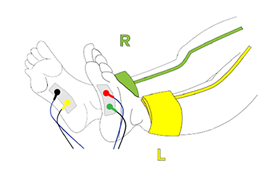
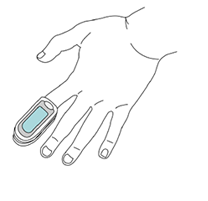
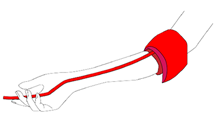
VASCULAR FUNCTION AND AUTOMATIC NERVOUSSYSTEM ASSESSMENTS
The CMAT System is focused on the Autonomic Nervous System and the Vascular System for the early detection and monitoring of the many neuropathic complications resulting from chronic diseases such as Diabetes.
The CMAT System integrates data of sudomotor tests, heart rate variability analysis at rest and during Ewing tests, pulse plethysmography analysis and Ankle Brachial Indices from SweatC (a.k.a SudoC), LD-Oxy and TM-ABI devices for assessing autonomic nerves (small fiber and cardiac autonomic neuropathy), arterial stiffness and peripheral artery disease (PAD).

The CMAT System includes the following tests to determine these clinical outcomes and comprises:
Sudomotor function tests using sympathetic skin response via disposable electrodes following a predetermined double sympathetic stimulation ( electrical and metaboreflex), "not" patient or operator dependent, in order to get reproducible results.
Volume plethysmography analysis from the oscillometric method in order to calculate the brachial-ankle pulse wave velocity and peripheral Augmentation Index ratio.
Cardiac Autonomic Reflex Tests or Ewing Tests - using the photoplethysmography analysis to accurately detect the beat to beat heart rate during the Valsalva Maneuver, Deep Breathing Exercises, and Postural Changes
Ankle Brachial Index (ABI ) and optional Toe Brachial Index ( TBI) measurements using the oscillometric method and volume plethysmography at 2 levels.
Benefits of the CMAT System
The CMAT System performs accurate, simultaneous measurements that are based on established medical guidelines without any extrapolation of the results. The accuracy of the ANS Testing allows you, the Physicians, to detect patient conditions early and, in turn, affect better and timely treatment.
Through Added Technologies, We Are Able To Increase Performance In The Testing Of

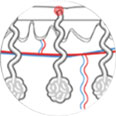
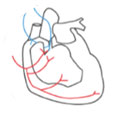

The CMAT System is able to :
Autonomic Nervous System (ANS) Testing is recommended for all patients with Type 2 Diabetes at the time of diagnosis. for patients with Type 1 Diabetes, ANS Testing is highly recommended after 5 years from the time of diagnosis.
(Boulton et al., 2005; Tesfaye et al., 2010; Spallone et al., 2011; Bernardi et al., 2011)
SYMPTOM CHECKLIST
ESTABLISHING MEDICAL NECESSITY FOR ORDERING THIS TEST FOLLOWS
A VAST ARRAY OF POTENTIAL SYMPTOMS.
(Just one symptom identifies medical necessity to run this test)
Automonic
Nervous System
Dysfunction (Ansd) 1
Endothelial
Dysfunction
(Endod) 2
Sudomotor
Dysfunction
(Sudod) 3
Cardiometabolic
Autonomic
Neuropathy (Can) 4
Plethysmography
Cardiovascular
Disease (Ptg CvD) 5
Cardiometabolic
Risk (CmR) 6
Insulin
Resistance (IR) 7
Small Fiber
Sensory
Neuropathy (SFN) 8

THE LIST OF SYMPTOMS THAT MEET THE MEDICAL NECESSITY REQUIREMENTS FOR ADDITIONAL TESTING IS VAST. THIS WILL MAKE IT EASIER TO OBTAIN ACCURATE AND ACTIONABLE PATIENT DATA THROUGH MULTIPLE PATIENT TESTING AND MAKE THE CONDITIONS NECESSARY FOR ENHANCED DIAGNOSIS AND PATIENT CARE IN YOUR MEDICAL PRACTICE.
PHYSICIAN TAXONOMIES
TAXONOMIES - LARGEST PATIENT POPULATION
Our RM-3A ANS Testing and PECE Virtual Platform can be accessed and utilized by the largest Physician population across multiple Physician Taxonomies.
PHYSICIAN TAXONOMIES THAT WILL QUALIFY FOR OUR SYSTEM

BILLING CODES
THROUGH OUR CMAT SYSTEM, WE SAVE PHYSICIANS 10 MINUTES OR MORE ON THE ANS TESTING, WHILE REIMBURSEMENTS ARE ASSURED FOR PROPER BILLING SUBMISSIONS WITH THE EXACT CODES GENERATED YOUR GIVEN CITY, STATE, AND EVEN BURROUGH.
THE CODES WE USE ARE:
95923 - 95943 - 95921
AND WE ALSO USE CARDIOMETABOLIC CODE 93923
Copyright © 2019 WAS. All Rights Reserved.Terms & ConditionsPrivacy Policy

